
Monday, February 27, 2017
Thinking of Thoughts
When looking out the window, I often imagine what it must have been like to have lived in the time of Ghandi. What I'm aching to see is the revolutionary nonviolence, peaceful protesting, and hope in people's eyes. But the people I see now are dull and broken; their voice stuck in their throats and their minds in outer space. Your Majesty, Ghandi, as it were, was a true leader amongst men; however, in our desperate times for change we've ironically forgotten the valuable lessons that he taught us. In other words, this grand, intelligent, leader has become is simply a man with vision, ideals, and an instinct for humanity. The physical punishment that goes with violence is greatly underplayed. Shootings are greatly understated in many countries due to the government trying to keep it all under wraps. The safe environment of our own hometown keeps us sheltered from all the suffering and pain that happens all around us all the time. People are rarely truly thinking, they show their ignorance by laughing at others. Others might argue that violence is the quickest method for change, but that is no matter. Change through such a means is always short lived and fake; a cowardly method for those with no greater plans. The world continues to hinge upon such methods, however, with wars still being fought around the world; a game of ping-pong for losers. There is no finish, just the sound of the rallying of bullets bouncing off of one another. In the end all will be lost, the earth a cavern filled with the corpses of billions who once had hope in their eyes.


Monday, February 13, 2017
Lobster Lunacy
"Wanna grab something to eat?"
"Sure!"
The anecdote regarding lobster used to being considered a prison food, "Consider the Lobster" by David Foster Wallace, was really intriguing. This is in direct contrast, as DFW mentions, to today. Nowadays, lobster (along with most seafood) is seen as a delicacy, a food fit for the rich. So my question was: How did lobster rise all the way from being dumped on a paper plate all the way up to being served on a silver platter?
Whenever I go to a restaurant, my parents are always telling me to order a specific item. In fact, most of the time it's a type of seafood, either fish or shrimp. They tell me to because they believe it's the most value. But what exactly is "value"? I certainly don't prefer eating shrimp or lobster to pizza, and pizza is only a fraction of the cost. If the value is not dictated by my own level of satisfaction or taste, then surely it must be the nutritional one?
One argument one might make then, is the nutritional value behind the food. While there might be something there, it is definitely not the main reason for the exponential rise in cost. If it were, then why aren't fruits and vegetables more expensive? Surely something like spinach has at least as much, if not more nutrition then lobster. Why, then, aren't you eating spinach three times a day? If we truly based food price on nutritional value alone, then why isn't spinach listed under the main course and not some dish served on the side?
So if lobster isn't valued for nutrition or health benefits why is it so expensive? That's essentially the same question as asking why do we watch reality TV? Or, why do we follow celebrities? It's all about cultural perception.We want to eat like the rich, talk like the rich, be the rich. Lobster, itself, has not changed over the years. It has not suddenly changed its self to become more palatable or more nutritional. It has stayed the same from the time the Founding Fathers landed to now. But it is the value that we place on it that has. We have transformed it into a delicacy. A food once consumed in vast quantities by the poor, has now consumed middle class America.
"How about we go to Red Lobster?"
"Yeah....... no."
"Sure!"
The anecdote regarding lobster used to being considered a prison food, "Consider the Lobster" by David Foster Wallace, was really intriguing. This is in direct contrast, as DFW mentions, to today. Nowadays, lobster (along with most seafood) is seen as a delicacy, a food fit for the rich. So my question was: How did lobster rise all the way from being dumped on a paper plate all the way up to being served on a silver platter?
To answer the aforementioned question. I did a bit of research.
During the early to mid 1800s, lobster was plentiful. The Atlantic was teeming
with lobster, and were even given the nickname "cockroaches of the
sea". When the railroad industry took off in the mid to late 1800s, however, so did lobster. Lobster was served on the trains to those who had rarely or never even seen it before. Inland passengers loved it. From there on, lobster became popular in the inner states, and its price skyrocketed.
"In the U.S. pop-food imagination, lobster is now the seafood analog to steak, with which it’s so often twinned as Surf ’n’ Turf on the really expensive part of the chain steak house menu."
One argument one might make then, is the nutritional value behind the food. While there might be something there, it is definitely not the main reason for the exponential rise in cost. If it were, then why aren't fruits and vegetables more expensive? Surely something like spinach has at least as much, if not more nutrition then lobster. Why, then, aren't you eating spinach three times a day? If we truly based food price on nutritional value alone, then why isn't spinach listed under the main course and not some dish served on the side?
So if lobster isn't valued for nutrition or health benefits why is it so expensive? That's essentially the same question as asking why do we watch reality TV? Or, why do we follow celebrities? It's all about cultural perception.We want to eat like the rich, talk like the rich, be the rich. Lobster, itself, has not changed over the years. It has not suddenly changed its self to become more palatable or more nutritional. It has stayed the same from the time the Founding Fathers landed to now. But it is the value that we place on it that has. We have transformed it into a delicacy. A food once consumed in vast quantities by the poor, has now consumed middle class America.
"How about we go to Red Lobster?"
"Yeah....... no."
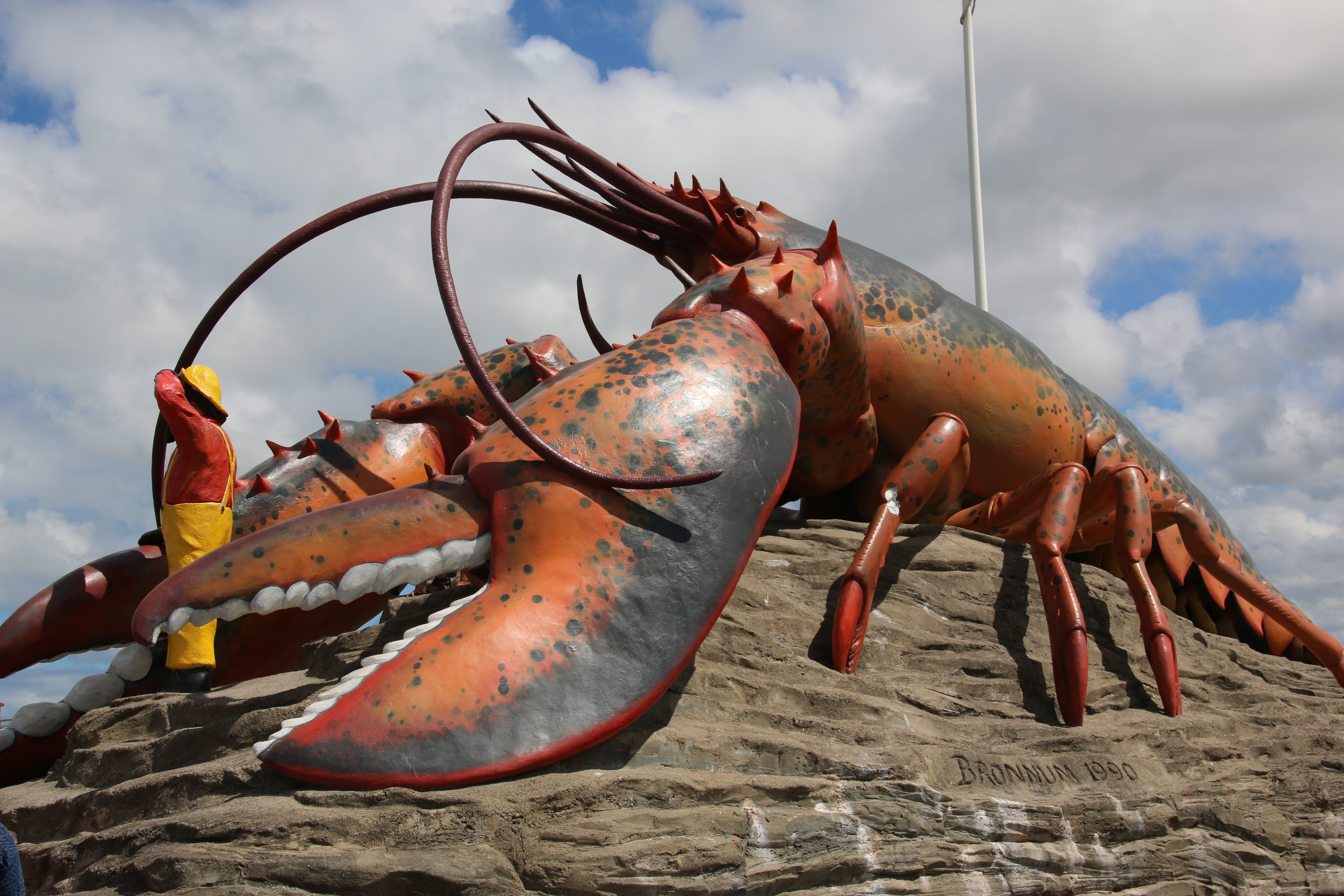 |
"All Hail Our New King"
|
Monday, February 6, 2017
Concentrating on Chess
The short story, "Arm Wrestling with My Father", was intriguing because it managed to connect with me on a more personal level. Through its anecdotes and analogies it managed to amaze me through emotional appeal. The different expressions/forms of love and how it tied in to their ever changing lives, left me speechless.
I can remember it like it was yesterday. There it was, 64 squares and 32 pieces. The ritual of the mind had begun from a young age. I remember in those games how my father would always let me choose which side to play, knowing that he would always win in the end. My greatest efforts did not change a thing. It did not matter whether I played he English opening or the French defense, both were futile against his continual advances. I saw myself staring into the timer, a bead of sweat formed across my forehead. In the end, all I could here from him was a series of "checks" before the final "checkmate". Each loss was a detriment to myself; another strategy book that I had to read. I became obsessed and consumed with the task.
"I am no longer a challenger, quick to correct his verbal mistakes, determined to beat him whenever possible in competition."
It was not soon after that I had already moved on. The games were shoved aside in favor of other interests. The mat of 64 squares was left rolled up on the table. The 32 pieces were stored neatly in their respective pouches. The timer sat there, waiting for time to pass. School was becoming ever more intense, and the time that I shared with him dwindled evermore. Maybe this summer, we will play each other again. Maybe this summer, I will be the one to say "checkmate". Or maybe rather than any of this, I'll just have fun.

(A little chess puzzle as a throwback to those times. As the title implies, white moves first and it takes three moves to checkmate. Can you figure it out?)
I can remember it like it was yesterday. There it was, 64 squares and 32 pieces. The ritual of the mind had begun from a young age. I remember in those games how my father would always let me choose which side to play, knowing that he would always win in the end. My greatest efforts did not change a thing. It did not matter whether I played he English opening or the French defense, both were futile against his continual advances. I saw myself staring into the timer, a bead of sweat formed across my forehead. In the end, all I could here from him was a series of "checks" before the final "checkmate". Each loss was a detriment to myself; another strategy book that I had to read. I became obsessed and consumed with the task.
"I am no longer a challenger, quick to correct his verbal mistakes, determined to beat him whenever possible in competition."
It was not soon after that I had already moved on. The games were shoved aside in favor of other interests. The mat of 64 squares was left rolled up on the table. The 32 pieces were stored neatly in their respective pouches. The timer sat there, waiting for time to pass. School was becoming ever more intense, and the time that I shared with him dwindled evermore. Maybe this summer, we will play each other again. Maybe this summer, I will be the one to say "checkmate". Or maybe rather than any of this, I'll just have fun.

(A little chess puzzle as a throwback to those times. As the title implies, white moves first and it takes three moves to checkmate. Can you figure it out?)
Monday, January 30, 2017
Normal Nancy
The question that intrigued me the most from the reading of "Disability" by Nancy Mairs was the effect of how one sees or values themselves. How one views themselves... perhaps that is apart of their own identity as well? Someone like Nancy Mairs, who has a disability, is also extremely self-confident. She is able to overcome her disability and see herself as a normal individual. It is her disability that gives her such strong determination. So is the key all about mentality? How one chooses to view them self? It is apparent that one's own thoughts and feelings are, to some extent, influenced by one's own surroundings. It is also apparent from the looks and stares seen in public that disabilities are not normal. But what about mental disabilities? Qualities such as one's own self-esteem or personality. Surely those may not be as extremely obvious to the everyday commoner, but they are also disabilities. Those, I believe, may be some of the toughest to overcome. Someone who lacks the fiery passion of Mairs will have a much more difficult time accepting who they are. The Media, as Nancy Mairs explains, is responsible for much of this. It is difficult for one to accept them self, if they are not accepted by somebody else first. As humans we are always insecure. About our looks, our personality, our relationship with others... our everything. The Media, either directly or indirectly, continues to perpetuate images of beauty standards and "normalcy". It is from this that we continue to widen the gap between an actual human and their idealized images. As time moves forward, society will continue to chase after the intangible, perfectionist views that are portrayed on magazine covers and TV ads. It is from this that we continue to follow this upward trend of the idealized image, and aim to prove to ourselves that we are "normal". We are not. To be someone who you are not is the exact opposite of what it is to be normal.
"In the extreme, you might feel as thought you don't exist... Everyone else is "there", sucking breath mints and splashing cologne and swigging wine coolers. You're "not there." And if not there, nowhere."

"In the extreme, you might feel as thought you don't exist... Everyone else is "there", sucking breath mints and splashing cologne and swigging wine coolers. You're "not there." And if not there, nowhere."

Monday, November 28, 2016
The Hidden Side
I love stories that bring up characters that have a hidden side/motivations. It's even better when these characters are portrayed in such a way that makes them seem cunning or manipulative. For these two reasons alone I was absorbed by the first five chapters of The Great Gatsby. The story consists of many characters that fit these two qualities. They have an artificial outward appearance and choose to hide themselves deep inside. In doing so, however, the characters use lies. Mr. Gatsby, for example, seems to have grown up in the "Middle West" of San Francisco; Jordan Baker seems to have changed the minds of witnesses. Even Nick, who seems to be the most honest character in the novel, uses manipulative words. Gatsby, however, is the most notable character for this trait with his vast connections and use of others. Although he puts up a front that seems genuine and trustworthy, his relations with others just serve to further his own means. This can be seen with Nick. Gatsby befriends Nick because of one reason: his present relations with Daisy. Ultimately, however, one can see Gatsby's change in nature once he achieves his purpose. He loses interest in Nick after being reintroduced. Nick is simply a tool at Gatsby's disposal.
Even early on, however, we can see that Gatsby is not as flawless as when he first appeared. He makes mistakes when lying, and occasionally fails to hide his emotions. He slips up the most after being reunited with Daisy. When Nick asks what business he's involved in, Gatsby, not thinking, tells Nick that it's "[his own] affair". He is unsure of what to do when Daisy enters; he "reevaluates" himself and his possessions when touring, and nearly "topples down a flight of stairs". These instances demonstrate the persona that Gatsby has spent the last several years creating: one of grand wealth and importance. He believes that such a thing is essential for him to win over Daisy. In doing so, however, he lies. He hides his genuine personality. He uses others. He involves himself with scandalous people and activities. He sacrifices his own past and his own identity. To finally achieve his dream of being with Daisy, Gatsby destroys himself.

"They had forgotten me, but Daisy glanced up and held out her hand; Gatsby didn't know me now at all... I went out of the room and down the marble steps into the rain, leaving them there together."
Even early on, however, we can see that Gatsby is not as flawless as when he first appeared. He makes mistakes when lying, and occasionally fails to hide his emotions. He slips up the most after being reunited with Daisy. When Nick asks what business he's involved in, Gatsby, not thinking, tells Nick that it's "[his own] affair". He is unsure of what to do when Daisy enters; he "reevaluates" himself and his possessions when touring, and nearly "topples down a flight of stairs". These instances demonstrate the persona that Gatsby has spent the last several years creating: one of grand wealth and importance. He believes that such a thing is essential for him to win over Daisy. In doing so, however, he lies. He hides his genuine personality. He uses others. He involves himself with scandalous people and activities. He sacrifices his own past and his own identity. To finally achieve his dream of being with Daisy, Gatsby destroys himself.

Monday, November 21, 2016
I Just Wanted To Say...
Pecola and I are alike. We both share something in common, our feelings of inadequacy. No, I am not going to argue that I have it nearly as bad her. Truth be told, you'll be hard pressed to find someone as damaged as her. But, this emotion that we share stems from none other than ourselves. Our own self-hatred; our own self-loathing. The difference, however, between our desires is that one is physically impossible to obtain, while the other is attainable through hard work and dedication. So, even when given the opportunity, a golden opportunity for change, I do nothing. Pecola, on the other hand, is hopeful. She prays and seeks help. I procrastinate, laze around, and make excuses. Disgusting. I have been presented with the American Dream and what do I do with it? Throw it away. Opportunities some have never even had, right in front of me, and as each day passes, another door closes.
The thing is, I don't have any right to complain. At all. I've been given the tools, the skills, and the knowledge to make changes. There is nobody trying to restrict me from doing so. No society has turned their back on me. I am not deserving of pity. To see someone such as Pecola and then to see myself. It sickens me. I, who have wasted multiple opportunities, cannot even begin to compare to her. Why am I the one to live such a carefree lifestyle? Why am I the one with all the opportunities? These should have been Pecola's, not mine.
All of these serve as a reminder as to why I am grateful. Grateful for my friends, teachers, family, and all who truly care about me. For if I had grown up in Pecola's shoes, I could not have lived. I could not have withstood such a society. I would've broken immediately. If The Bluest Eye has taught me anything, it is that I am blessed to be who I am. To live in such a place here and now, is more than I could've asked for. I am lucky. To be here, sitting in a chair typing this...To have people care about what I think and care about who I am. I have so much to be thankful for.

The thing is, I don't have any right to complain. At all. I've been given the tools, the skills, and the knowledge to make changes. There is nobody trying to restrict me from doing so. No society has turned their back on me. I am not deserving of pity. To see someone such as Pecola and then to see myself. It sickens me. I, who have wasted multiple opportunities, cannot even begin to compare to her. Why am I the one to live such a carefree lifestyle? Why am I the one with all the opportunities? These should have been Pecola's, not mine.
"All the waste and beauty of the world—which is what she herself was. All of our waste which we dumped on her and which she absorbed. And all of our beauty, which was hers first and which she gave to us."

Monday, November 7, 2016
Analyzing Actions
The Bluest Eye is a story unlike any others that I have read previously. It attempts to cover a wide variety of topics through story components. It's content is one that is extremely different from the typical literature that is read in classrooms. That's why I think I enjoy reading it so much; it is so very different. There's no sugarcoating anything. It's black and white truth. From the adult conversations, to violence, to extremely dark imagery, Morrison manages to pack all of this into the first eighty pages. One of the parts that first stood out was the purchasing of the sofa. The way that Morrison describes the furniture and it's problems seems odd at first, until examined further. Only then is it clear that sofa, split across the back, depicts a slave. Only then is it clear that that sofa, which "[Nobody] could take joy in owning it", is really about the African American in society. It's these moments of reflection and seeking Morrison's purpose that makes this story so unique. Another aspect of the story that's so interesting are the characters. Each character feel so genuine. Perhaps that is because their personalities are demonstrated by both actions and words, which can spark large contrasts similar to people in real life. Take Maureen Peal for example, she tends to know a lot about a bunch of different things, but not in its entirety. She knows about law suits for example, but not what they really are. She also thinks she knows why women have periods, but doesn't completely know. This once again reflects this contrast between innocence and reality. Children tend to be seen as extremely innocent, but this isn't the truth. Children know a lot about what's really going on, even if they don't understand completely. That's why I find The Bluest Eye so very interesting. It manages to explain so very much, while attempting to explain so very little.

Subscribe to:
Posts (Atom)